

Dissecting the Data Center Debate in PA
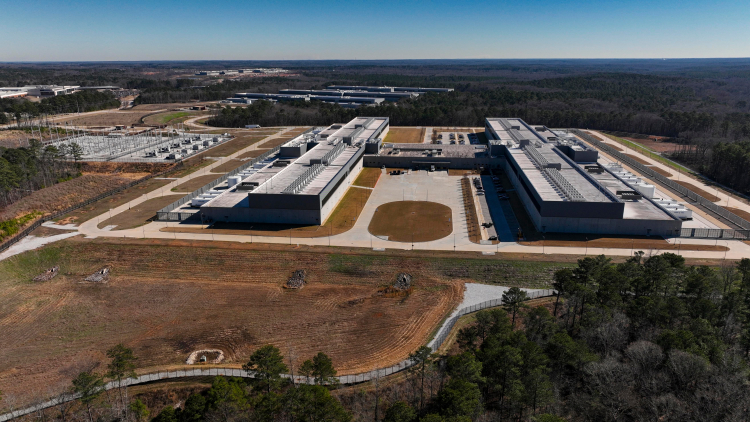
You cannot open social media, turn on the news, or read the local paper without hearing about data centers. They have captured the attention of the public and decision makers in Pennsylvania. But across the commonwealth, there's a massive backlash against their construction.
Residents are flocking to township hearings and town halls to voice their frustrations. Local groups on Facebook and other platforms have popped up and grown to thousands of people. In Archbald, an epicenter of data center development in northeastern Pennsylvania, a Facebook group has drawn in over 12,000 people in a town of about 7,000. The engagement is intensely in opposition to data centers' presence in the region.
Lawmakers in both parties are looking at ways to rein in development, from moratoriums on the construction of data centers to increased regulatory oversight. Indeed, Data centers are hitting a sweet spot of anger.
Many people are concerned about AI's impact on jobs, mental health, and human behavior. It doesn’t help that many leaders of big tech companies stand to benefit from the proliferation of data centers Others have environmental concerns. After all, data centers are massive and consume significant amounts of water and energy. There’s a broad worry, moreover, that data centers' energy consumption is driving up utility costs, straining family budgets.
And there’s a spectrum of NIMBY concerns from visual blight to traffic congestion to overdevelopment and proximity to homes that are undergirding the opposition.
It appears that the opposition to data centers is organic. People are angry. Politicians are already trying to harness this anger.
Though data centers were not a central topic, particularly in paid media, in Pennsylvania’s recent primaries, the issue is starting to work its way into the electoral space. A prior supporter of data centers, state treasurer and Republican gubernatorial candidate Stacy Garrity, recently announced her support for a moratorium on data centers. She’s already held two town halls or listening sessions in areas impacted by data center development.
Garrity is a heavy underdog against Gov. Josh Shapiro,, and a gambit to ride the wave of anti-data-center activism could be her only chance.
In the legislature, elected officials from both parties are introducing and moving bills around moratoriums and regulatory reform. Endangered Republicans like state Sens. Jarret Coleman and Rosemary Brown, both facing challenging elections this fall, are at the forefront of the Republican effort to rein in data center development.
On the Democratic side, state Sen. Katie Muth seems to be a favorite of the anti-data center activists, who drove a write-in campaign for her in the Democratic gubernatorial primary.
It seems like the issue of data centers could stick around in Pennsylvania much like shale development and fracking over the previous two decades.
But what if it doesn’t?
There’s a chance that data center development isn’t the tectonic plate shifting issue that it seems to be right now. What if data center development follows the path of a land use issue instead?
For many land-use issues or large-scale development in general, opposition follows a well-trod path.
A developer proposes building a 300-unit apartment complex. Neighbors and residents revolt. They go to zoning meetings, hold up the project, comment in their local Facebook groups, make some signs, and engage in real, local grassroots activism.
Sometimes they’ll win, and the project will stop; sometimes they’ll make some progress, and it gets scaled down, or there’s a favorable community benefits agreement. But oftentimes the project moves ahead. There’s a year or two of annoying construction. The apartment complex rises and fills with tenants.
Then what happens next is really uninteresting most of the time: nothing.
For many large-scale local projects, once they go online, people learn to live with them. The traffic isn’t as bad as they thought it would be. The sightlines or the project's height are totally fine.
Life doesn’t really change.
There’s a chance that data centers follow this path. Once a few data centers get built, they’re integrated into the larger environment and community.
People see that some concerns were fair and some weren’t, and everyone moves on.
Over the next few years, we’ll see what path data center development follows. Is it a lasting issue, or is it more similar to most other land use issues?
On the way to finding that out, we’ll probably see lots of legislation and some real electoral impact, along with more and more angry residents who hate everything about data centers.