
Lamb Has Seen the Democrats' Future. It Already Happened to Him.

Conor Lamb’s office sits across from PPG Paints Arena in downtown Pittsburgh, a world away from the rural stretches of Washington County where he pulled off one of the most improbable Democratic wins of the Trump era. The former congressman is 41 now and, at least for the moment, no longer anyone’s candidate. That freedom shows.
In March 2018, Lamb emerged on the scene by defeating Republican Rick Saccone by 627 votes in a special election for Pennsylvania’s 18th Congressional District, a seat Donald Trump had carried by nearly 20 points in 2016. Republicans and aligned groups spent more than $10 million trying to hold it. National media treated the race as a referendum on the president’s political strength. I covered that race, and it was a breath of fresh air when Lamb won and – at least for me – proof that some of the eternal verities about Rust Belt campaigning still held true.
“First of all, I have to acknowledge that I had a big advantage because the Republicans nominated Saccone,” Lamb tells me. “He was not a strong candidate. Before I take credit for anything, I think you just have to acknowledge that. In the same way that Josh Shapiro easily defeated Doug Mastriano, having a bad opponent definitely helps.”
Fortunately, Lamb doesn’t stop at false modesty. He offers something politicians rarely provide: an honest accounting of why he won, why he lost, and what those outcomes reveal about a party that no longer knows how to talk to voters it once owned.
The Old Playbook
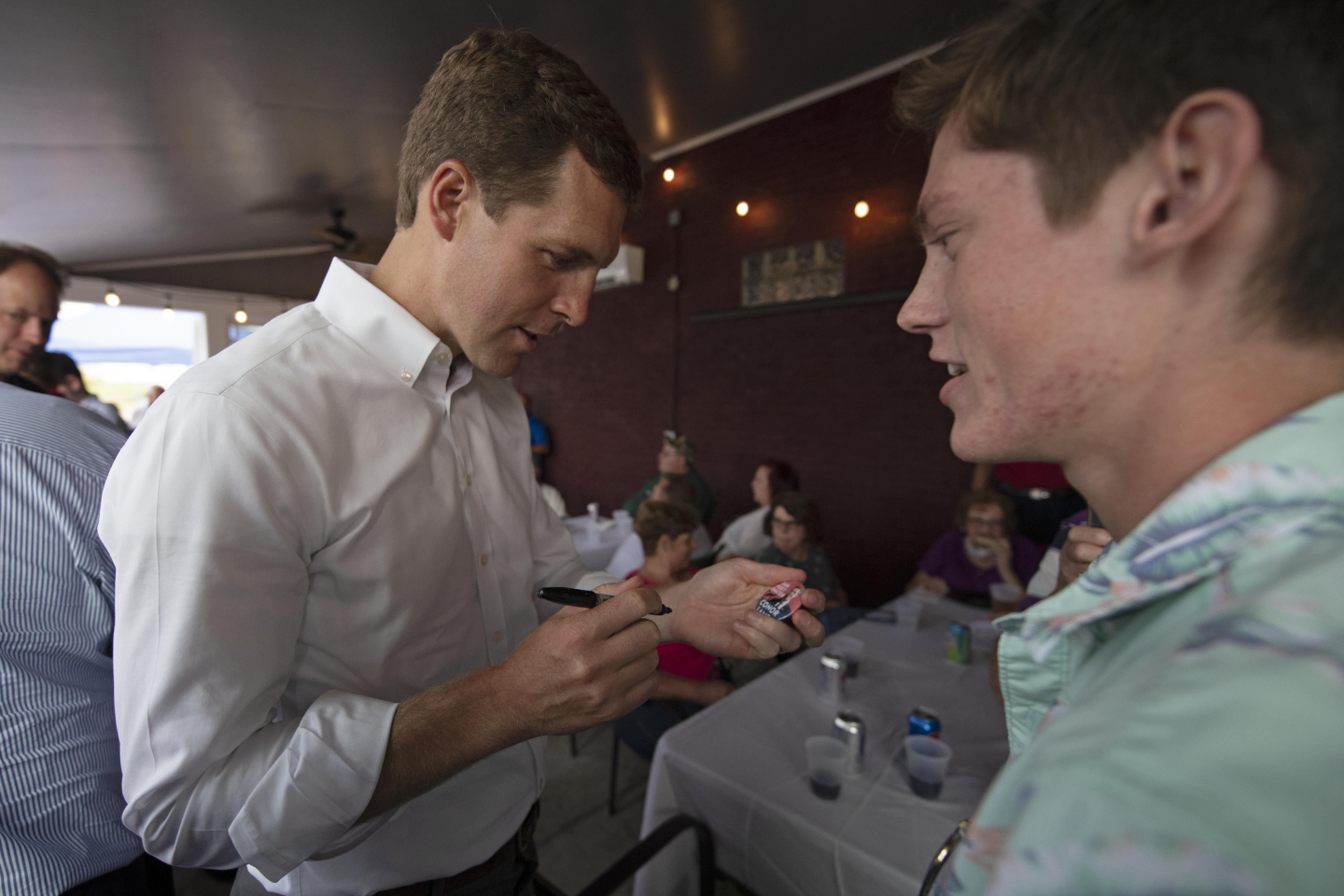
Lamb ran his 2018 special election the way Rust Belt campaigns looked in the 1990s, with lots of in-person events at barns and union halls complemented with an inclusive, well-executed television campaign. He went to Cokeburg and Lone Pine and Amwell Township, to places long left fallow by the Democrats.
“People were walking in one by one, shocked to see that there were other people showing up at a Democratic event,” Lamb recalls. “It was almost like they were emerging from nuclear winter, because they didn't know there were still other Democrats around.”
The strategy worked because the district still remembered Democrats who looked like Lamb: moderate, Catholic, rooted to the area. Lamb’s family had been in Pittsburgh politics for generations. His grandfather Thomas F. Lamb was Democratic Majority Leader in the Pennsylvania state Senate and later served as Secretary of Legislative Affairs under Gov. Robert Casey. His uncle, Michael Lamb, served as Controller of the City of Pittsburgh. Conor himself was a Marine, a former federal prosecutor, a graduate of Central Catholic High School. Tall, thoughtful, and well-spoken, he was straight out of central casting for a southwestern Pennsylvania Democrat.
After redistricting threw him into a new district against three-term incumbent Keith Rothfus, Lamb won again, 56% to 44%. In 2020, against rising Republican Sean Parnell, he won a closer race that required days of mail-ballot counting before NBC News could project a winner. (Parnell is now the top communications official at the Department of Defense under Pete Hegseth.)
Then came 2022 and John Fetterman.
The Lesson He Learned Too Late
Lamb says his 2018 victory contained the seeds of his eventual defeat. The old campaign style worked in a special election where voters still remembered Democrats like him. But those in the Biden orbit, myself included, drew a broader conclusion: social media was overrated, an inaccurate mirror of society. The old ways still worked.
“I think that was part of what gave me the confidence to run against Fetterman,” Lamb says. “He was really such a strong social media presence that if you think about the lesson of my race, I was like, well, oftentimes social media exaggerates people’s strength. He’s a mile wide and an inch deep. If I work really hard like I did last time, people will see the real me.”
In 2022, that theory collapsed. Fetterman won every county in Pennsylvania and beat Lamb by more than 30 points. Digital impressions had somehow become primary impressions, and Lamb had entered a different kind of race running the same kind of campaign.
“By the time of that primary, it was just more and more true that digital comes first in shaping people’s impressions, and the real life follows that. I didn’t know that firsthand yet because that hadn’t been my experience.”
The defeat forced Lamb to confront something he should have recognized earlier. In 2020, when Parnell released a campaign video featuring Bernie Sanders, the Squad, and literal flames as they “burnt this country to the ground,” Lamb thought it was disqualifying.
“I was like, this is insane. People are going to see this. Remember, this was 2020, not now. I was like, people are going to think this guy’s like a criminal. And yet he raised money and earned Twitter followers and he was on Fox every day.”
Parnell, it seems, understood the attention economy, whereby the message trails the attention. Lamb was still running on message.
Fetterman’s Superpower
Lamb doesn't pretend to like Fetterman or agree with his approach to politics. But he respects what his former rival understood about the changing electorate.
“He’s really shrewd in a very different way than I am,” Lamb says. “One thing he understood early on was just using the name Joe Manchin over and over again. He basically told the Democratic primary voters what they wanted to hear, which is that we have to get these traitors [i.e., centrists like Manchin] out of our party who vote with Republicans sometimes. Obviously ironic now, given how Fetterman occupies that spot.”
During the 2022 primary, Lamb found himself defending his working relationship with Manchin while Fetterman hammered the West Virginia senator’s name. Lamb’s voting record showed 100% alignment with Biden, but it didn’t matter. Fetterman understood that invoking Manchin evoked something visceral in primary voters. Policy details were beside the point.
Lamb also raised the 2013 incident in which Fetterman, then mayor of Braddock, pursued an unarmed Black jogger named Chris Miyares and held him at shotgun-point after hearing what he believed were gunshots. Lamb thought it would matter, as did I – and it did, since it helped shore up support for Fetterman with many of my relatives.
“I should have thought when that reaction was coming in. I thought, it’s 2022, we’re still in the George Floyd moment. But no one ever put enough money behind that for everyone to really stop and know about that incident. By the time your relatives were hearing this, they’d already formed their impression of Fetterman,” said Lamb.
Fetterman’s ability to reinvent himself from a finance-background transplant from the Philadelphia suburbs into a Pittsburgh guy struck Lamb as a symptom of cultural change. People process images now, not biographies.
“If you’re diving into those distinctions, a lot of people are realizing now we’re not really primarily a literate culture anymore. If that change is really taking place, then [Fetterman’s] look and the simple way that he communicates things is a more powerful tool than family tradition and connection to place and a broader story.”
The World That Disappeared
Lamb’s analysis becomes yet most interesting as he progresses from election tactics to regional structure. A conversation with a local elected official in Beaver County during his time as congressman gave him a framework for understanding what Democrats lost.
One Steelworkers local, the official told Lamb, served as the basis of the entire community. People met their wives at the union dances. Every kid’s sports team was funded by the local. If you had a problem at work, you went there. They handled healthcare. They distributed charity during the holidays.
“He explained how everything ended when that one mill closed. And then after that, there was no place in the community where everyone came together,” said Lamb.
This official had lived through the great Rust Belt transition in real time as a politician. When the union hall existed, he didn’t have to campaign anywhere else. Everyone met him there. When it disappeared, he started going door to door.
“So he tells me that after that, these same folks are asking questions about abortion and they’re asking about the gun club and other cultural questions. It’s fair for people to have those interests. But they became elevated in the absence of that unifying institution that was there.”
Lamb sees this as the fundamental Democratic problem. The party speaks in individual policies: lowering the Medicare age, expanding the ACA. But Trump created an alternative entertaining world for his followers, a world where culture-wars struggles were foregrounded.
“I think Trump has thrived on that. He’s built an alternative world for people to be part of. Make America Great Again is this kind of vision of America that people can feel like they live inside of. The Democrats haven’t done that kind of world building. We speak in individual policies. As a result, we’re talking past each other and not reaching MAGA voters we might have lost.”
The Federalist Democrat
Lamb’s prescriptions sound less like a Democratic platform than like James Madison arguing for distributed authority. He returns repeatedly to the idea that Democrats should hand some power back to localities and away from Washington.
He cites the U.S. Attorney system as a model. There are 93 U.S. Attorneys, and before Trump, each one operated as an independent decision-maker in their region. Prior to resigning in 2017 following Trump’s election, Dave Hickton in Pittsburgh decided what got prosecuted in his 26-county area. Washington didn’t really tell him what to do.
“It’s the only agency that really works that way. But you could easily imagine a world where, instead of one Secretary of Transportation, there were 25 deputy secretaries split up around the country, and every one of them got a pot of money that region could access. The agency would feel a little closer to the people it serves.”
This isn’t small-government conservatism dressed in blue, Lamb insists. He’s not talking about doing things on the cheap. He’s talking about who makes decisions.
“I think a lot of Democratic messaging sounds like we are diagnosing diseases among the people that we are then going to cure with the medicine we bring to the table. As we have seen, that doesn’t work. That backfires. It’s leaving people out of it.”
Indeed, that metaphor became literal. Flu and Covid vaccination rates dropped after national messaging and mandates. The loss of trust is real, whatever its origin.
Lamb recalled joining the Marines in 2009, when swine flu was raging. His platoon received some of the first trial vaccines. Nobody cared. Nobody asked what was in it. They did what they had to do to stay ready. “That's the mission. Let’s go.”
Eleven years later, Lamb watched as soldiers were getting kicked out of the military for refusing the Covid vaccine. “It happened so fast. I think we've had a hard time adjusting to that reality.”
Shapiro and RGGI
Asked about Gov. Josh Shapiro’s decision to withdraw Pennsylvania from the Regional Greenhouse Gas Initiative, Lamb supports it without hesitation.
“Climate change is a global problem for nation states to solve. The thing about RGGI is it covers 12 or 13 states, only one of which, Pennsylvania, is a net exporter of energy. All you’re doing is making it even harder for Pennsylvania to compete against [an energy exporting state like] Ohio than it was before.”
He frames the climate issue in terms of credibility, noting that Democrats won’t have any voice on climate if voters think the party is hostile to their jobs.
“I felt like when I was a member of Congress, we had great messages for people that were employees of government, universities, and large healthcare organizations. But the vast majority of Americans are in private sector businesses. We didn't have a great message for people like that. If anything you do involves a fossil fuel – and many jobs do – immediately you’re wondering whether the Democratic Party’s for you.”
The Midterms
Lamb sees 2026 as an accountability election. Trump promised affordability and hasn’t delivered. The ACA subsidies are gone. Premiums are rising even for people not on the exchange.
“Midterms really are a referendum on who's in charge. The Democratic Party has no obligation to lay out some broader affirmative vision of the future. It’s an accountability election. He promised you A, he delivered B.”
Even so, the House math is brutal. When Democrats won 40 seats in 2018, that was considered a slight underperformance against expectations. To win that number again in 2026, the’'d have to go deeper into Trump territory than the current map allows.
“As a party, we’re still not taking seriously the need to put up candidates that can compete in those areas and support them. We’re going to leave seats on the table.”
Lamb notes that Scenery Hill, where I grew up in Washington County, is redder today than it was in 2018, even though only seven years have passed.
“You rerun that same special in March of 2026, if all I did was win by 700 votes the first time, I may not have enough to win this time.”
What Lamb Would Tell Someone Running
Lamb can’t say precisely what advice he’d give a Democrat running for Congress or Senate out of southwestern Pennsylvania today. The game has changed too much.
“If I’m right that social media has not just changed the manner in which we deliver messages but has really changed what messages themselves are attractive and important to people, then one of the things it demands the most is this sense of authenticity. Who are you really? Not who are your donors paying you to be, but what do you believe? And increasingly, how passionately do you believe it?”
The Democratic Party is struggling with the idea of candidates who don’t fight hard enough. But authentic passion necessarily means narrow-casting. You ca't be spacious enough in your personality to understand the needs of 750,000 people, let alone 12 million.
“When I first started, people drilled into me: it’s about their problems, not your problems. I was always trying to talk about the people. People need this, people need that. Now I personally find a lot of politician’s political messaging to be very self-absorbed.”
The trick, Lamb says, is fusing authenticity with substance. Fetterman managed authenticity without substance. As of now, one would be hard-pressed to name a legislative success from his years in public life outside of raising attention related to the Senate’s stodgy suit-and-tie dress code.
“He’s been in public life for how many years and truly no one can claim an accomplishment of his. No one can point to something that’s been done or finished as a result of his efforts. With a typical legislator, you can say he passed this bill, he led on that bill.”
The View from the Outside
Lamb speaks with more candor than most politicians because he’s not running for anything.
“I think we’re in a moment where it really pays to just kind of drop our priors a little bit and have an honest conversation about where we’re going, because things are getting pretty bad under Trump. We need to make sure we as Democrats are right about what we're saying next.”
Trump doesn't listen to anyone, Lamb observes. He flies in, walks to the podium, walks back to his plane, flies out. Democrats could offer something different: a real avenue for people to be heard, a willingness to act on what they say, decentralized policymaking that respects regional differences.
“If you want to do something differently in Washington County than the way it's done in Pittsburgh, I can respect that. I think Democrats haven't been able to convey that. The platforms have made us all so focused on what happens in Washington that we’ve lost sight of the ability to do that.”
The candidate who figured out how to combine digital-era attention with substantive governing could change everything. Lamb doesn't know who that person is. He’s not sure the person exists yet. But the opening is there, and the old playbooks won’t cut it.
“I think we need to figure out how to show people we trust them in order to regain their trust. Try to involve people in the process of what we want to do.”
Outside Lamb’s office, PPG Paints Arena rises against the Pittsburgh skyline. The arena opened in 2010, after the beautifully ugly old Civic Arena and its non-working retractable roof closed for good. That building had hosted the Penguins since 1967 along with pro wrestling and ice shows and traveling circuses.
Now it’s a parking lot. The Penguins play in the new building, all high-priced seating and nosebleed views. Everything in the Rust Belt has changed. The $64,000 question – surely much more now with inflation – is whether Democrats can change with it.