
Blame Pennsylvania for the Gerrymander Mania
Last updated 01:33 PM EDT • Read time: 5m
In recent weeks, there has been almost as much focus on gerrymandering and redistricting congressional seats as there is discussion of Iran, illegal immigration, affordability, and data centers.
Pennsylvania should be blamed for initiating today’s chaos.
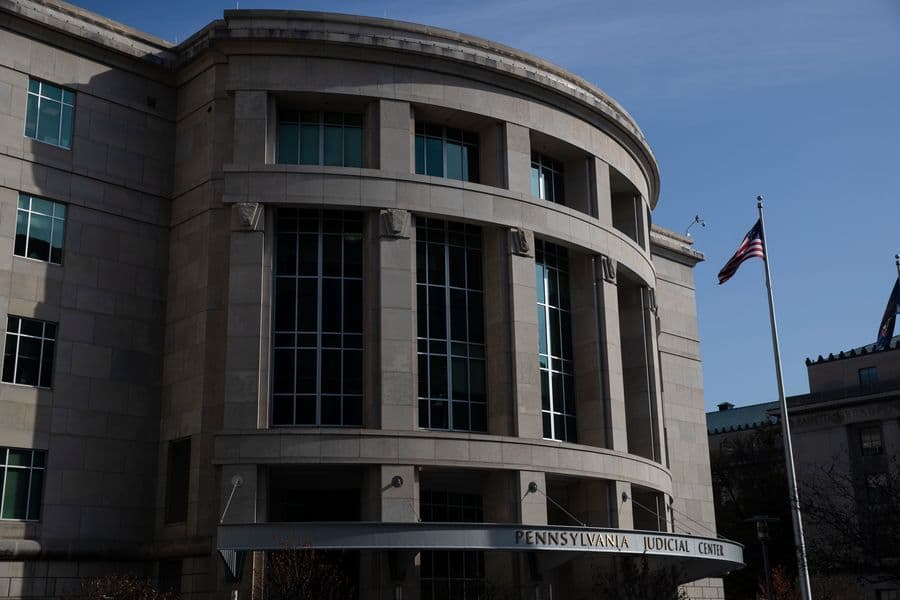
Well, to be more correct, blame Obama’s former Attorney General, Eric Holder, for using Pennsylvania as a test case for his new mission: a permanent Democratic majority in the U.S. House. In 2018, the organization that he chairs, the National Democratic Redistricting Committee, played a role in advocating for Pennsylvania’s Supreme Court tear up of the state’s congressional map mid-decade. Compounding it, the partisan (Democrat majority, elected) state Supreme Court itself drew the new boundaries: shifting Pennsylvania’s delegation from 13-5 (GOP) to a 9-9 split, thus achieving “justice” in the eyes of Democratic power brokers.
Over a dozen states are acting or are threatening to take action to re-draw their congressional lines. Each side is accusing the other of “starting” it or raising the stakes. But in reality, it started in Pennsylvania in 2017.
Today, Democrats have attacked judges and justices, throwing countless jabs at the U.S. Supreme Court – threatening to expand and pack it with Democrats – and at the Virginia Supreme Court by threatening to remove the entire Court for not bowing to the will of Democratic activists thirsting for power. The irony is that most of the Virginia Supreme Court members are Democrats.
There’s always been partisan politics in redistricting – how each state draws boundaries for its congressional districts. Some states try to have “impartial” citizen panels or “experts” draw the lines; others, like Pennsylvania, use state legislators to draw congressional lines.
How did we get to the chaos of 2026?
Under the Constitution, every 10 years, there’s a census. Thereafter, the 435 members of the U.S. House are assigned to the states based on average population. Yet, in practical terms, if the census suggests that every House member represent 750,000 people, even states with a lower population get one member. Thereafter, the remainder are divided among the remaining states. This is known as re-apportionment.
Then, each state begins the second part: re-districting, having been assigned X number of seats, how will those seats be distributed across the state? What will the boundaries be? By custom and tradition, those newly adopted boundaries are used in the next election - the “2’s” (2002, 2012, 2022) – and stay in place until the next decade.
But, as we are learning, custom and tradition mean nothing to Democrats with an agenda.
In Pennsylvania, congressional boundaries are put in place through legislation. A bill is introduced; hearings take place; amendments are offered; debates are held; a vote is taken. Pennsylvania did that in 2011, with bipartisan support in both Chambers, and with the support of the Philadelphia Democratic Party chairman, himself a member of Congress. The bill was signed into law.
Elections took place in 2012, 2014, 2016. Then, as 2018 approached, Holder and his army of lawyers, activists, and commentators jumped in and sued before the Pennsylvania Supreme Court. The legal argument was that “too many” Republicans represented Pennsylvania in Congress, despite the fact that the lines were drawn through legislation and had bipartisan support.
Throwing aside custom, tradition, and the precedent of deferring to the legislature, the Court’s Democratic Party majority ruled that the boundaries were illegal and, ultimately, they themselves drew the lines.
This not only had the effect of causing chaos in Pennsylvania, changing the lines weeks before candidate filing for the 2018 election (where some candidates found themselves living in other districts). It opened the door to disrupt the nationwide tradition of only creating lines after each new census.
With part one of the Democrats’ House takeover plan in place – ending the custom of only restricting after a census – team Holder moved to part two: using the legislative process in states where they hold the “trifecta” to redraw lines whenever they need seats, e.g., California, New York and now, Virginia, despite the new governor pledging not to redistrict if she was elected.
Let’s not forget re-apportionment of seats among the states was built upon a Biden policy – a purposeful decision to actively seek out and count anyone residing in a state, including illegal immigrants. This had the effect of disproportionately helping Democratic trifecta states, e.g., California, Minnesota, and New York. As a result, those states have several extra members of Congress – extra Democrats, since illegal immigrants were purposely added in.
If Democrats get their way, they may not only take over the House this fall. They will have created a new custom: elections never end. Power brokers will politicize the census, courts, and agencies to continuously design and redesign congressional seats to win and hold on to power.
The old ways were imperfect, but better. The parties fought. Then elections were held – and we all tried to keep the courts as removed from party fights as possible.
But the chaos and food fights of today started in 2017 when Pennsylvania was used as the test case – throwing away tradition and further tearing us apart.
Guy Ciarrocchi writes for RealClear Pennsylvania and Broad+Liberty. A Senior Fellow with the Commonwealth Foundation, follow Guy @PhilaFreedomGuy

Platner Says He Won't Be an 'a–hole' Like Fetterman in Senate
By Tara Suter, The HillBlame Pennsylvania for the Gerrymander Mania
By Guy Ciarrocchi, RealClearPA
What Chris Rabb's Win in Philly Means for Fetterman
By Sam Janesch, InquirerVoters Signal They're Done With MAGA Chaos
By Mark S. Singel, PennLive
Republicans: Pre-Canvassing Bill 'Lets Dead People Vote'
By J. Kramer, Center Square
Pennsylvania Today
Featuring the latest pennsylvania news
RCP Today
Top stories on RealClearPolitics
Investigations Today
Latest investigations news
Defense Morning Recon
Featuring the latest news