

What Will PA Do With Skill Game Machines?
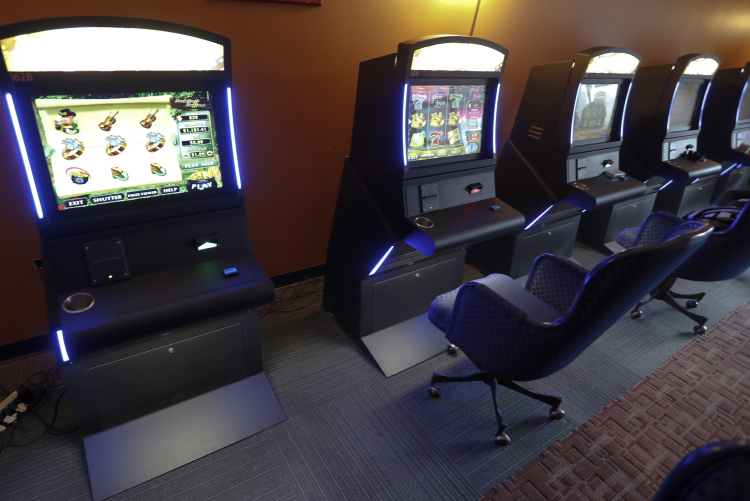
At an auto garage in Washington County, one elderly regular walks over from the public housing project where he lives and feeds the single Pace-O-Matic machine for hours. He is no trouble, the owner – a former partner-in-crime of my father’s during their shady used-car peddling days in the 1970s – told me. After all, customers wait in the small, dingy waiting room anyway, and the box covers about one bill a month, something like the internet. What the regular doesn’t do, in all those hours, is trouble himself with the part of the game that until two weeks ago made it legal.
On June 15, the Pennsylvania Supreme Court ruled that machines like that one are slot machines “several times over,” unlawful under the state's Gaming Act and Crimes Code, and that the lower-court decisions blessing them for years were “deeply flawed.” Justice David Wecht’s detailed 66-page opinion stayed enforcement for 120 days, a clock that runs to roughly mid-October. There are already about 70,000 of these machines in Pennsylvania, nearly three times the 24,000 regulated slots in the state’s casinos. Almost everyone in Harrisburg now agrees they should be taxed and regulated. Where they disagree is the rate and the destination. This has left some corner stores and fire halls that count on them unsure whether they can survive it.
I wrote last month about the money the skill-games industry spent trying to beat state Sen. Camera Bartolotta in my home district's Senate primary after she floated taxing the machines. That was a fight over who writes the rules. The harder fight, over what those rules will cost and where the revenue will be spent, starts now.
The whole “skill” defense rested on a 1983 case, Commonwealth v. Two Electronic Poker Game Machines, which held that a device is a gambling machine only when chance, rather than skill, predominantly decides the outcome. The Pennsylvania Skill device is built to flunk that test on purpose. A player feeds in cash and wins or loses on a Tic-Tac-Toe puzzle the trial court found to be governed by chance. The skill hides in a feature called, “Follow Me,” a Simon-style memory game available only after a loss and buried behind a cryptic prompt, that can return 105% of the wager to any doughty soul who finishes its twenty-five rounds. The attorney general's office, noting that it takes twelve minutes and pays back at most twenty cents on a four-dollar bet, understandably called it a fig leaf. “’Follow Me’ isn’t there for the players,” the Commonwealth argued; “it's there for the lawyers.”
Wecht agreed, then went further. The skill-versus-chance question stopped mattering in 2017, he wrote, when the General Assembly amended the Gaming Act to fold “skill slot machine” and “hybrid slot machine” into the definition of a slot machine. Once the legislature wrote the skill defense into the definition, the argument was dead. “It is not this Court that declares ‘skill games’ to be unlawful,” Wecht wrote. “Rather, it is the General Assembly that did so nearly a decade ago.” The device, he held, is a slot machine several times over: it always met the Gaming Act's general definition, and after 2017 it is plainly a skill or hybrid machine besides.
All six participating justices agreed the devices are illegal gambling under the Crimes Code, the holding that exposes them to seizure; the Court divided 4-2 only on whether they are also slot machines under the Gaming Act, with Justices Brobson and Mundy reading that statute not to reach them, though even they called the machines “gambling devices.” Wecht was equally clear the ruling took no side on whether Pennsylvania should have them. How one feels about skill games, he wrote, “is irrelevant”; the decision was “a matter of straightforward application of existing statutory law,” which is the province of the nigh-deadlocked legislature. The Court answered the legal question and left Harrisburg the political one: what the state now does with the machine in the body shop.
Jim Brown, a senior vice commander of the VFW's Pennsylvania department, did the arithmetic for CBS Philadelphia. Say a machine takes in $100. At a rate near what the state levies on casino slots, the post pays out $52, then splits what is left with the distributor that owns the box, fifty-fifty. The post keeps $24. “That doesn't get you very far,” Brown said. Right now, those posts pay nothing and keep close to half the take. That is the money that kept a Cressona American Legion post open through the pandemic and that volunteer fire companies in Schuylkill County claim bought 50 to 60% of their trucks' equipment over four years.
A gas station owner off Spring Garden told me that his two machines do little for the store – certainly less than the hot and cold sandwiches they also sell – but that he likes playing them himself on slow shifts, and that if the rules are about to change, he needs to know now. Neither he nor the body shop owner is getting rich; both keep the box for the few hundred dollars a month it throws off as insurance, property, and supply costs climb during an era of rampant inflation.
Gov. Josh Shapiro wants a tax rate of 52%. Casinos, the argument goes, pay the state a 34% tax on slot revenue under the Gaming Act, with local and other assessments pushing the real burden toward 54. He built roughly $765 million of first-year skill-games money into a budget that was due July 1. Senate Republican leaders have floated 35. State Sen. Gene Yaw, whose district includes the Miele Manufacturing plant that assembles the consoles, wants 16. The industry's own preference is a flat $500-per-machine monthly fee, which would raise closer to $300 million. The 52% rate, small operators say, would be the largest tax increase on small business in state history and would force many to relinquish these machines; a flat fee leaves the high-volume bars happy and the one-machine body shop paying what a smoke shop running ten pays.
State Rep. Jonathan Fritz, a Republican from Susquehanna and Wayne counties, went over the spread with me. One camp sat near 20, another at 52, and by the usual logic of splitting the difference he expects a landing in the mid-to-high 30s. He predicts it goes to the wire: “a fierce tug of war that will take us right to the 11th hour of this 120-day stay.” State Sen. Judy Ward, a Blair County Republican and a nurse for two decades before the Senate, told me she was still studying it, which is an exceedingly responsible answer.
Fritz counts three camps in the building: one for general spending, one for specific projects, and a third, his, for property tax relief. “Property tax relief has been married to gambling revenue since its inception,” he told me, a point confirmed by the statute. The 2004 Gaming Act names property tax relief among its own stated purposes, and 34% of slot revenue, roughly $1 billion a year, flows to homeowners through the line on a tax bill called the homestead exclusion. However, what that relief looks like by the time it reaches a porch is another matter. A Mechanicsburg tax collector of 32 years told ABC27 the homestead credit started near $120 and has crept to about $160, shaved off the top of a modest bill most homeowners never notice.
The fire halls and corner stores in the middle of this certainly did not break the law on purpose. The Court stayed its ruling 120 days precisely because, as Wecht put it, so many Pennsylvanians placed “reasonable reliance” on the lower courts that called these machines legal. Pace-O-Matic, having vast amounts of skin (and machinery) in the game, understandably encouraged that reliance, winning a 2014 Beaver County case and still advertising a guarantee to indemnify the locations that take its boxes.
KDKA’s Rob Pratte and I have talked on his evening show about the various bedraggled individuals we have observed partaking of these devices. My 6-year-old has asked me why a grown man would sit in front of a blinking box in a gas station for a whole afternoon (“couldn’t he just play on his Nintendo Switch?”). Both then and now, I cannot arrive at a good answer to this question. These are grubby, ugly-looking machines, and the fraternal societies and corner stores leaning on them are leaning on similarly ragged regulars to fund their operation.
By mid-October, the legislature must craft a regulatory framework for these machines or the state police may face the unpleasant notion of seizing them, one small-town address at a time. Whether it goes to property tax relief or something else also remains to be seen, though I'd put money on the former, were I a betting man. In any case, the bill has at last come due: for five years the law indulged the fiction that these addiction-by-design boxes are games of skill. As is always the case, the heaviest part of that regulatory burden will fall on the backs of the various local groups and businesses now relying on them and the poor souls, in even more straitened circumstances, who spend their days playing them.