

Polling Lessons from the Michigan, Wisconsin Races
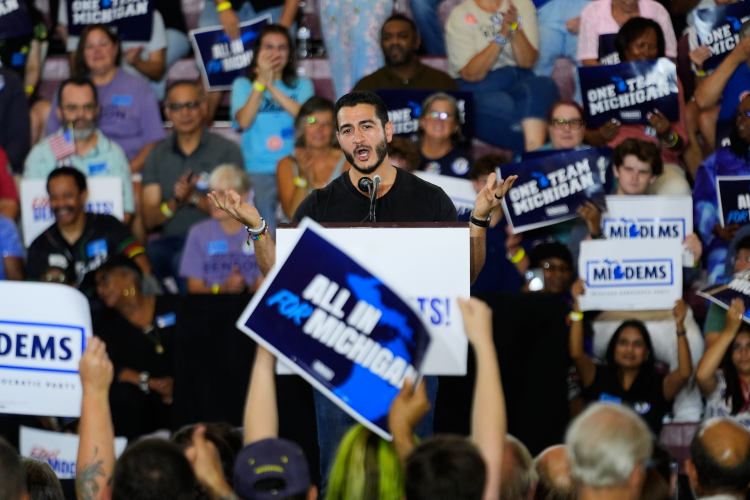
Francesca Hong was supposed to win the Democratic Party nomination for governor of Wisconsin by 20 points – she lost by 0.4%. The Polymarket trading showed Hong’s likelihood of winning was at 92%. Meanwhile, Abdul El-Sayed was supposed to win the Michigan Democratic Party nomination for U.S. Senate by 15 points—and he won by 1%.
Why were the “experts” so wrong?
It’s too soon to give a pinpoint explanation, but to those who have seen these types of trends before, there are some key elements that help explain the huge mistakes.
There’s a volatile, seismic political and cultural shift taking place – with inevitable aftershocks –across our nation’s political landscape, especially within the Democratic Party. And, both inside and outside their party, there are a series of forces pushing back. No one or two snapshots in time will show the true picture.
The first mistake by professional pollsters is their belief that they were conducting scientific analysis, not recognizing that for the Left – Socialists, Progressives, and their allies – polling is a tool to be manipulated to move public opinion.
Being “revolutionaries,” they need to create the sense that they are winning and the status quo is losing. They are far more likely to participate in polling – especially digital polling where they can over-perform – perhaps more than pollsters realize. And being loud and proud of their cause and candidates, they will gladly tell anyone who will listen what they believe and who they support. Contrast this with many Americans who don’t answer calls from anyone not in their contact list and keep their political positions private.
It’s important to bear in mind – as is often the case with insurgencies, especially today’s Democratic Party – that many of the loudest, proudest screams of support are from younger voters. There are two characteristics at play: they’re more easily manipulated to “join the crowd,” and far less likely to actually vote. For example, Hong won Dane County – home to the University of Wisconsin – by only 7%, with only 44% of the vote.
With part one in place (over-reported, over-counted momentum), there’s part two: say what the cool-kids are saying.
Some respondents – seeing the growing popularity and polling support for El-Sayed or Hong – tell pollsters what they’re “supposed to say.” (“I guess I’m for Hong, right; isn’t everybody?”) This is the inverse to some Trump supporters telling pollsters they were voting for Clinton/Biden/Harris because it was “bad form” to admit they were voting for “him.” (There was a similar phenomenon more than a half-century ago in Philadelphia for the campaigns for Mayor Frank Rizzo, who always outperformed polling.)
A corollary of the first two elements is the third: some presumed El-Sayed/Hong “supporters” entered the polling booth and voted for El-Sayed/Hong’s opponents. In the privacy of the polling booth – free from the public’s eyes, they were free to do what they wanted. Or some traditional or “establishment” Democrats finally listened to the rhetoric (“I hate Thanksgiving”) and realized that El-Sayed and Hong were not their kind of Democrats.
Over time, polling done well shows trends and even predicts results with a high degree of accuracy. But when the very act of polling is purposefully manipulated by some of the subjects to affect public opinion, there’s a problem.
When polling is misused by pollsters, influencers, or those in the media trying to reinforce a narrative or advance a cause or candidate, a circular problem begins – each influencing and nudging along the other.
There’s another piece missed by pollsters and by those in the media relying on the polls as “sacred texts.” It’s the same problem that coaches and sports general managers have when relying solely on analytics – they mess up, sometimes “hugely.” Instead: watch a lot of games and practices. Talk to the players. Talk to other people who do the same. And listen.
Far too few reporters, commentators, and analysts leave their studios – be they in major cities or their retrofitted apartments – and talk to voters.
So, they become prisoners of analytics and of the echo chamber. And their audiences get bad data – which impacts their behavior. We can be told about trends that don’t exist or are over/under-appreciated. Peer pressure can be created where none is merited. Voter turnout can be artificially energized or deflated.
There are too few reporters in legacy media who talk to people, especially when covering Democratic Party politics at this time of turbulence. Go to a diner, a VFW, a little league game. Hang out at a Chik-Fil-A…and, yes, the artsy coffee shop. Talk with voters and listen.
Analytics plus the “eyes and ears” test.
Pollsters need to adapt. News programs and commentators need to do some legwork.
And voters need to be on alert. Are we being told what people are thinking, or what people want us to think?