

Pennsylvanians Want ICE to Cool Off
After last month’s record snowfall in Pittsburgh, Mayor Corey O'Connor offered some advice to anyone thinking about moving a lawn chair out of a freshly shoveled parking space: “Please respect the chair law in the neighborhoods.” The practice is technically illegal – abandoned furniture on a public right of way – but Pittsburgh police have looked the other way for more than a century. You remove the snow, you earned it. Don't touch my chair.
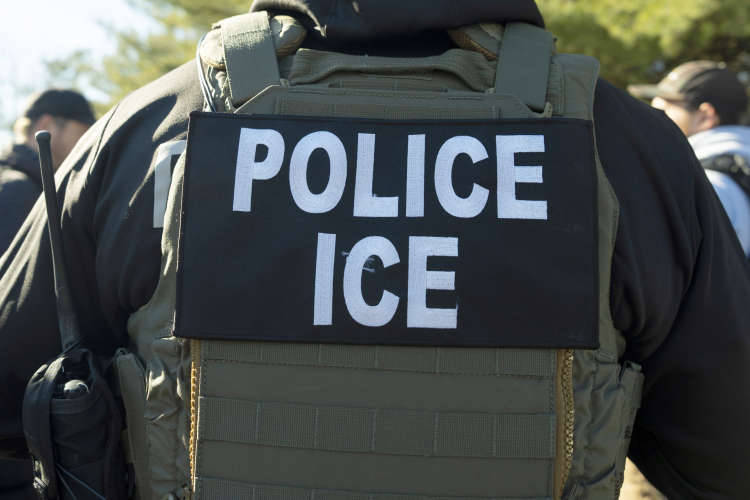
That same impulse – leave me alone, get off my lawn, I didn't ask for your help – runs through a new statewide survey from RealClear Opinion Research and Emerson Polling that found 58% of Pennsylvania residents think ICE enforcement has gone too far. Only 17% think it hasn't gone far enough. The survey of 2,000 residents, conducted February 10-13, carries a credibility interval of plus or minus 2 percentage points.
The Keystone State numbers only get worse for ICE from there. Eighty-six percent support requiring agents to wear body cameras. Sixty-six percent support allowing residents to sue if ICE violates constitutional rights. Fifty-eight percent want ICE barred from arrests on state property. Fifty-three percent want agents prohibited from wearing masks during operations. A plurality, 45%, still oppose eliminating ICE outright, but the operational backlash spans party lines.
None of this is surprising. I grew up in Washington, PA, about 30 miles south of Pittsburgh, in a county that voted for Trump twice by double digits. The people I talk to back home were, until recently, content to rail about illegal immigration in the abstract. The situation in Charleroi, a small Washington County borough where several hundred Haitian workers arrived to staff a food processing plant, straining schools and the police budget, was a local grievance with real teeth. Trump name-checked the town during the 2024 campaign.
But the conversation has shifted. The people who were angry about Charleroi are now talking about ICE the way their grandparents talked about the federal government during Prohibition and the way their great-great-grandparents talked about the whiskey tax in 1794. Washington County was the epicenter of the Whiskey Rebellion, and Christopher Gadsden’s flag (“Don’t tread on me”) still adorns the bumpers of many F-350s and flies from plenty of porches out there (so do an increasing number of Confederate battle flags, but that’s another story). Our regional memory is long: overreach by distant authorities does not go over well.
RealClear’s statewide data backs up what I know about my hometown. Fifty-five percent of Pennsylvanians are concerned about immigration-related arrests in their area, with Hispanic residents at 64% versus 52% of white residents. When asked whether Congress should reform ICE operations even if it means a temporary government shutdown, 46% chose reform over the 39% who preferred just funding DHS.
There's a class dimension to this anger, too. My stepdad is a retired union coal miner from Indiana County who spent 35 years underground, much of it on his knees. He is anything but soft on immigration. However, as he watches the seemingly endless flood of TV coverage of ICE raids, he returns to the same point: “Trump’s not going after his rich buddies.” He means the meatpacking companies, the big agricultural operations, the construction outfits that have relied on undocumented labor for decades because it’s cheap and disposable. A competent enforcement campaign would have targeted those employers first, using E-Verify mandates and employer sanctions to dry up the jobs that draw unauthorized workers. Instead, ICE has produced a series of individual arrests, physical confrontations caught on camera, and fatal shootings. People in Washington County know what it looks like when the government comes down hard on the little guy while the bosses skate.
The survey suggests my stepfather isn’t alone in thinking the enforcement priorities are backwards. E-Verify – the federal government’s program that allows enrolled employers to confirm the eligibility of their employees to work in the United States – polls reasonably well at 53% approval (only 12% think it is a bad thing), with strongest support in finance and real estate (71%) and construction (67%). Pennsylvanians, in other words, are open to cracking down on the businesses that hire undocumented workers. They’re far less interested in watching masked federal agents shoot angry soccer moms or nab grandmothers and elementary school kids in parking lots. Forty-two percent think DHS Secretary Kristi Noem should resign, against 29% who say she should stay.
However, on the issue of whether immigrants have been good for their communities, 46% say positive and 28% negative. The partisan gap here is what really matters, and it’s enormous: 72% of Democrats say positive, while 41% of Republicans say negative. Indeed, anyone who has spent time in a place like Charleroi knows this is a far from settled issue, and heavily impacted by how many immigrants are actually in the area where the polled individuals live.
The political fallout is also landing unevenly. Gov. Josh Shapiro holds a 47-23% approval-disapproval split, a comfortable position as his reelection approaches (though his refusal to take a clear stance on the relatively popular Save Women's Sports Act has frustrated both sides). U.S. Sen. David McCormick sits at 30-29%, with his alignment to the Trump administration’s immigration posture leaving him no daylight from ICE’s unpopularity. U.S. Sen. John Fetterman fares slightly better at 38-32% – though his latter-day “straight talk express” bipartisan positioning isn’t insulating him from the broader discontent.
Former Congressman Conor Lamb predicted something like this. In an interview with RealClear Pennsylvania last month, Lamb argued that Democrats have a rare opening to become the party of limited federal interference. He cited the U.S. Attorney system as a model: 93 independent regional prosecutors making decisions based on local conditions rather than directives from Washington. “You could imagine a world where, instead of one Secretary of Transportation, there were 25 deputy secretaries split up around the country,” Lamb told me.
Lamb's broader point was about trust. “I think we need to figure out how to show people we trust them in order to regain their trust,” he said. A credible small-government Democratic message – a prime example of Clinton-style centrist triangulation that could completely reshape the political landscape – would respect regional differences rather than bulldoze them. “If you want to do something differently in Washington County than the way it’s done in Pittsburgh, I can respect that.”
Such an argument looks downright prescient now. Pennsylvanians are evenly split on local police cooperation with federal immigration authorities: 37% say always cooperate, 37% say only sometimes, 16% say never.
The Pittsburgh parking chair works as a metaphor for state-federal cooperation generally because it captures something real about this region’s self-policing tendencies. Such a practice has no legal standing. It relies on mutual respect between neighbors and a shared understanding that you get to control what you dug out. ICE agents showing up in masks, without body cameras, arresting people on state property? That’s someone moving your chair. It doesn't matter whether you liked the person they grabbed. The principle is the same: you don’t come into my neighborhood and impose your rules without my say-so, especially if you’re not giving the big bosses at the top the same rough treatment.