
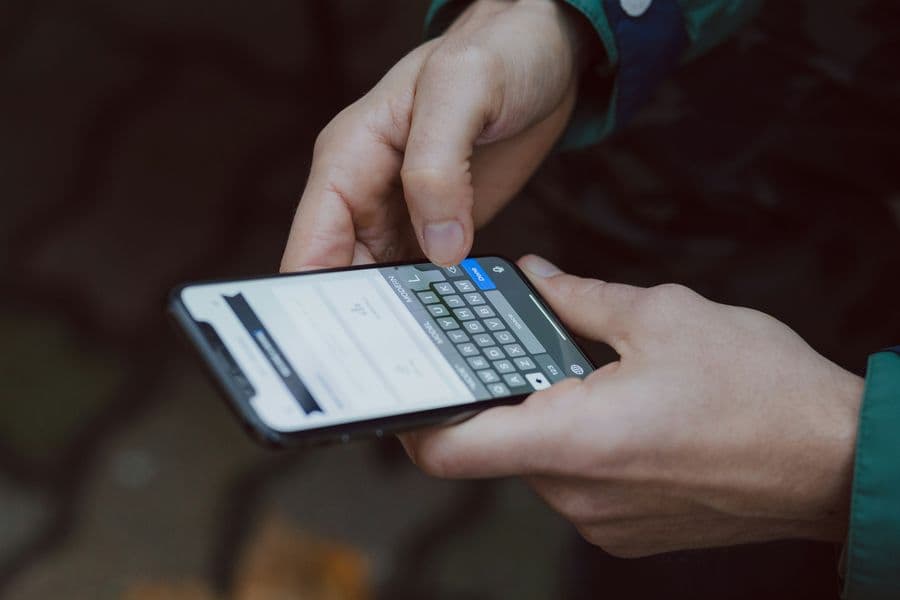
PA School Cellphone Ban Is a Good Start
Last updated 03:34 PM EDT • Read time: 7m
Join the Conversation
0The Pennsylvania Senate voted 47-3 last Wednesday to enact a school cellphone ban, two days after the House passed it 141-62. On Monday, Josh Shapiro signed it into law. The extremely urgent Senate Bill 1014 requires every public, private, charter and cyber charter school in the state to adopt a policy prohibiting student phone use during the day. Schools have to roll out their policies by the start of the 2027-28 school year. Exceptions cover medical conditions, individualized education plans, translation for English learners and the occasional field day.
Shapiro likely realizes how little this legislation can accomplish on its own. The largest study of school phone bans ever conducted, published in May by economists at Stanford, Duke, Michigan and Penn using data from 4,600 schools, found that strict bans cut non-academic classroom phone use from 61 percent of students to 13 percent. Unfortunately, test scores barely moved. Suspensions rose 16 percent in the first year. Stanford's Thomas Dee called the results "sobering" and still argued for keeping the bans, since the phones remain a well-documented distraction in many other ways. Even more regrettably, the law covers only the school day. The heavy use of social media accounts that the legislative history surrounding the bill blames for the adolescent mental health crisis (and that has surely precipitated a decline in reading) kicks into high gear after dismissal.
My phone-less, screen-restricted 6-year-old daughter attends Pittsburgh's Environmental Charter School, so the Post-Gazette's wild Sept. 6 story about the school's middle and high schoolers’ heavy use of their cellphones hit home for us. In the first year after the pandemic, ECS staff noticed lots of students ordering DoorDash and Uber Eats to the front office during the school day. "We had McDonald's breakfast meals delivered, and that's what locked it down," Niki Hutcherson, the school's food service director, told the paper. "It was getting ridiculous." ECS banned deliveries starting in 2023-24. Students responded by routing orders to the back doors, which created a security problem. The school ended that by confiscating the food, meaning the kids (and the parents whose credit cards they were using) wound up wasting money that most could probably ill afford to lose.
A Johns Hopkins survey of more than 1,000 teenagers, published this summer, found that nearly one in four had used a delivery app during school hours and almost half used one after school (60 percent of those orders were fast food). A FinanceBuzz comparison found DoorDash orders run 83 percent above in-store menu prices once fees and markups stack up, and a meal that costs under $10 at the counter rarely comes in under $20 delivered. In the case of Environmental Charter, students were paying $20 (or more) to get an Egg McMuffin schlepped to a school building that serves high-quality, nonprofit-funded free breakfast. And this in an inflation-ravaged state where 2 million people were on SNAP a year ago! "Beam me up," as the late Mahoning County congress Jim Traficant would say, because there clearly won’t be any intelligent life here as long as unfettered phone access by minors remains the norm.
If you want to know why, consider how bad the underlying data looks. Jean Twenge's analysis of Monitoring the Future data, covering more than a million teenagers from 1976 to 2016, found that 60 percent of 12th graders read a book or magazine almost every day in the late 1970s. By 2016 it was 16 percent. A third of 12th graders had read no book for pleasure in the prior year, triple the 1970s share, while 82 percent visited social media every day. Jonathan Haidt drew on Twenge's work for the four eminently reasonable fixes proposed in "The Anxious Generation": no smartphones before high school, no social media before 16, phone-free schools and more unsupervised play. Pennsylvania is dealing with the phones-in-school problem and should take similar steps regarding social media use.
James Marriott, the Times of London columnist, published "The dawn of the post-literate society" in September 2025. Rose Horowitch's Atlantic cover story in July announced that the end of reading is here, and noted along the way that gambling now outranks reading as an American leisure activity. Not only is the decline real, but the starting point was lower than most people remember. Functional literacy never fully achieved in this notably anti-intellectual country. In 2019, Pennsylvania's best recent year on the National Assessment of Educational Progress, 40 percent of fourth graders read at a proficient level. By 2024, that was 33 percent, and the share reading below basic had climbed to 38 percent from 26 percent a decade earlier. Nationally, fourth and eighth graders at the 10th and 25th percentiles scored lower in 2024 than on the first NAEP reading test in 1992. Among adults, the share scoring at the lowest literacy level on the federal PIAAC survey rose from 19 percent in 2017 to 28 percent in 2023.
The legislative memo to the Senate in support of the bill labeled the root cause of this intellectual blight as "widespread access to smartphones and social media apps." As my co-author David Inman and I argued in American Affairs Journal, states must utilize their police powers to restrict social media, even if not all users abide by these new rules. Australia barred social media accounts for anyone under 16 on Dec. 10, 2025. Platforms removed 4.7 million accounts in the first month. Even so, the regulator still found more than eight in 10 under-16s on the platforms in March, and Canberra answered by doubling the fines. Ohio's law requiring parental consent for under-16 accounts survived the Sixth Circuit in June; Virginia's one-hour-a-day limit temporarily lost in a misguided district court in February and will hopefully be reinstituted on appeal. Pennsylvania's House passed a parental-consent and age-verification bill 105-95 in 2024, but the Senate let it die. Rep. Brian Munroe refiled it as House Bill 1430, which would make platforms verify ages and obtain a parent's consent for anyone under 16. Sen. Cris Dush's age-verification bill for adult sites cleared the Senate Judiciary Committee on Sept. 28.
The legislature can seize the initiative. Wednesday's 47-3 vote in support of the phone ban tells me such an appetite for reform exists. Shapiro touts the phone ban as his idea — anyone hungry to win a four-year gig in the White House needs ideas, after all — so it would be wise for him to take credit for all the other bills that could be coming his way. In that way, he can impress primary voters by doing some of the most important "sh*t" (as he likes to put it) that we as a society have ever had to undertake.
I still fondly recall when the notoriously inarticulate former vice president, Dan Quayle, stood in front of the United Negro College Fund in May 1989 and tried to recite the group's slogan, ultimately producing this gem: "What a waste it is to lose one's mind, or not to have a mind is being very wasteful. How true that is." If we fail to do the necessary work of locking down cellphones and social media to protect what’s left of the American mind, Quayle's mangled version of that slogan might as well become the national motto.
Oliver Bateman is a historian and journalist based in Pittsburgh. He blogs, vlogs, and podcasts at his Substack, Oliver Bateman Does the Work.

Platner Says He Won't Be an 'a–hole' Like Fetterman in Senate
By Tara Suter, The HillBlame Pennsylvania for the Gerrymander Mania
By Guy Ciarrocchi, RealClearPA
What Chris Rabb's Win in Philly Means for Fetterman
By Sam Janesch, InquirerVoters Signal They're Done With MAGA Chaos
By Mark S. Singel, PennLive
Republicans: Pre-Canvassing Bill 'Lets Dead People Vote'
By J. Kramer, Center Square
Pennsylvania Today
Featuring the latest pennsylvania news
RCP Today
Top stories on RealClearPolitics
Investigations Today
Latest investigations news
Defense Morning Recon
Featuring the latest news