
Northeast PA Can Draw Lessons from the Depression Era
Last updated 09:27 PM EDT • Read time: 5m
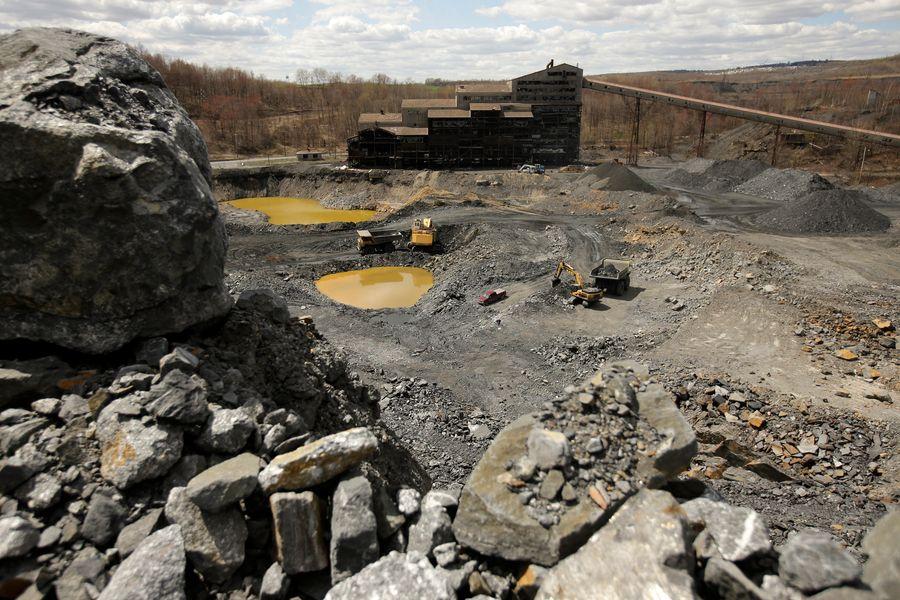
On October 28, 1929, a mining engineer from the Susquehanna Collieries Company stood before the Shamokin Rotary Club in Shamokin and painted a rosy picture of the future of the coal industry in Northeastern Pennsylvania.
Anthracite, he assured his audience, was “due for a comeback.” He spoke of modernization, new centralized breakers to process coal, and the bright future awaiting the region’s mineworkers. His words carried weight – this was the industry that had powered homes and factories in the United States for generations while employing more than 150,000 men across the region.
The next morning, Black Tuesday, sent stock markets into freefall, and with it, the Coal Region’s fragile hopes of a brighter future collapsed as the world began its descent into the Great Depression.
The cracks had been forming long before. Through the 1920s, demand for anthracite faltered. Americans turned to oil and natural gas to heat their homes, and railroads abandoned coal-fired locomotives. The coal that remained underground was harder to reach, buried deeper, and more expensive to extract after more than a century of deep mining.
Companies invested heavily in machinery to cut costs, but those efficiencies also meant fewer men needed at each colliery. Families felt the squeeze in pay envelopes that grew smaller and in work schedules that turned erratic. By the decade’s end, what had once seemed like steady work was anything but.
The industry began a steady decline through the 1930s that saw employment in the anthracite industry drop to 91,000 by 1940. Through the decade of decline, the six coal counties of Northeastern Pennsylvania were rocked by job losses and social decline.
Among the areas hit hardest by the Great Depression were the mining districts in western Schuylkill County and northern Dauphin County. These isolated pockets, Williamstown and Lykens in Williams Valley, and places like Tower City, Tremont, Branchdale, and Llewelyn west of Pottsville, suffered severely as the mining industry cratered. While the collieries here, owned by the Susquehanna Collieries Company and the Philadelphia and Reading Coal and Iron Company, had modernized, they were physically isolated from the centralized breaker and production facilities constructed by the companies in the 1920s.
This centralization of processing meant that deep mines operated in western Schuylkill County and northern Dauphin County no longer made financial sense to these companies and one-by-one, collieries began to close.
Among the first to shutter was the Short Mountain Colliery in Wiconisco Township near Lykens. The Susquehanna Collieries Company closed the colliery in October 1933 citing economic difficulties and the collapse of the anthracite market. The mines near Lykens and the adjacent town of Williamstown employed more than 1,600 workers before the Great Depression began.
Workers protested the closure, picketing outside the colliery complex and then occupying its grounds, attempting unsuccessfully to force the company to reopen the mine. Their efforts also included pleas to Gov. Gifford Pinchot and to the Federal government seeking assistance in reopening their communities chief industry and employer to no avail. The Short Mountain Colliery had been shuttered forever.
Others took to the hillsides on Short Mountain to open illegal mines around the property of the Susquehanna Collieries Company. These “bootleg” mines often accessed the Short Mountain Colliery workings and took coal that belonged to the Company. This illegal mining was extremely dangerous – three men were killed in a bootleg mine west of Wiconisco in August 1934 – but it was often all the stood between these mineworkers’ families and starvation in the early and mid-1930s.
Conditions weren’t much better in the nearby community of Williamstown. Though the Williamstown Colliery would not close until January 1942, it worked only sporadically through the 1930s, leaving hundreds of families destitute. Before the advent of New Deal policies under the Roosevelt administration, town leaders and businessmen worked to fundraise to feed the community’s hungry children, holding boxing matches at Williamstown’s American Legion post to raise money for their efforts.
Federal programs launched by President Franklin D. Roosevelt eventually reached these communities. Young men signed up for the Civilian Conservation Corps, sending home a portion of their earnings. The Works Progress Administration built roads, schools, and public projects that still dot the Coal Region’s landscape. Emergency relief brought surplus food into communities, while school lunch programs gradually took root under New Deal reforms. These efforts did not reverse the decline of the anthracite industry, but they helped families survive it.
By the early 1940s, however, the coal economy that once defined the region was on life support. In January 1942, newspapers reported that the Williamstown Colliery – once among the deepest and most productive in the state – would cease deep mining entirely. The mine was being dismantled, its rails and equipment pulled up and sold for scrap. America had entered World War II, but not even the needs of a nation at war could revive the region’s namesake dying industry. Never again would large-scale deep mining take place in this part of the Coal Region.
The Great Depression revealed both the fragility and resilience of Pennsylvania’s Coal Region. An economy built on a single extractive industry collapsed in spectacular fashion, leaving families to improvise, organize, and endure as the nation teetered. The comeback promised in 1929 never came.
What remained was something more enduring: the determination of communities that fed hungry children, rallied to defend their livelihoods, and put Federal aid to use when it finally arrived. Survival - not prosperity - was the region’s victory.The anthracite industry employs about 1,000 people today across Northeastern Pennsylvania. It endures, but the region itself continues to find paths toward a prosperous future in the wake of its economic collapse in the mid-20th century.
Jake Wynn is a public historian and communicator. He is currently working as a tourism marketing professional in Frederick, MD. Follow his website: wynninghistory.com.

Platner Says He Won't Be an 'a–hole' Like Fetterman in Senate
By Tara Suter, The HillBlame Pennsylvania for the Gerrymander Mania
By Guy Ciarrocchi, RealClearPA
What Chris Rabb's Win in Philly Means for Fetterman
By Sam Janesch, InquirerVoters Signal They're Done With MAGA Chaos
By Mark S. Singel, PennLive
Republicans: Pre-Canvassing Bill 'Lets Dead People Vote'
By J. Kramer, Center Square
Pennsylvania Today
Featuring the latest pennsylvania news
RCP Today
Top stories on RealClearPolitics
Investigations Today
Latest investigations news
Defense Morning Recon
Featuring the latest news