
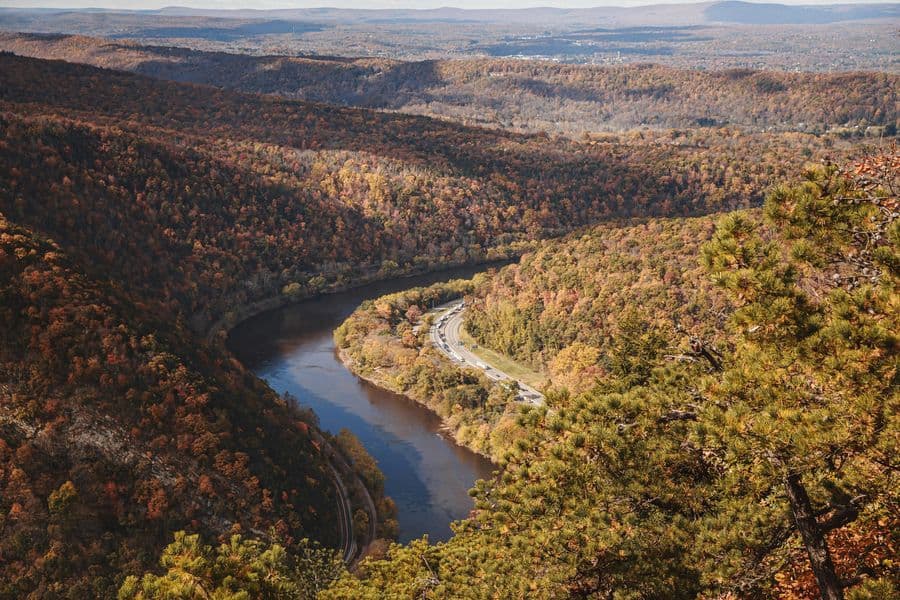
Pennsylvania's Clean Water Comeback
Last updated 09:45 AM EDT • Read time: 3m
In the face of recent headlines about the Chesapeake Bay’s lagging progress, Pennsylvania’s Susquehanna River stands out as proof that strategic, local-first investments can yield measurable results.
As long-time members of the Chesapeake Bay Commission, we’ve seen firsthand how Pennsylvania is turning the tide. While our state lacks a Chesapeake shoreline, nearly half of our state’s waterways drain into the bay, and the Susquehanna River alone contributes about 50% of its freshwater. That makes our role in the bay’s health not just important, but vital.
In 2022, we created the Clean Streams Fund. This initiative, now backed by a historic $50 million annual recurring investment, is Pennsylvania’s largest-ever commitment to address non-point sources of pollution like runoff from agriculture, acid mine drainage and stormwater and it promotes innovative, community-driven solutions.
One of the Fund’s most impactful programs is the Agriculture Conservation Assistance Program (ACAP). ACAP empowers local conservation districts to work directly with farmers, sharing costs for practices that reduce sediment and nutrient runoff. These aren’t just theoretical fixes. They’re practical, proven strategies that keep nutrients on the farm and out of our waterways, all while building healthier soil and more resilient farms.
The results are real. Over the past two decades, more than 967 miles of Pennsylvania streams have been restored to health. New tools like high-resolution mapping are helping us target the most impaired watersheds. Already, 58 streams across seven counties have been prioritized for intensive investment, with nearly half of the best practices needed already in place.
Progress is reflected in the Chesapeake Bay’s health report card from the University of Maryland Center for Environmental Science. The upper bay, which is fed primarily by the Susquehanna, earned its best grade in over 20 years last year and continues to score higher than most other areas of the bay. That’s not a coincidence. It’s the result of Pennsylvania’s deliberate, data-driven approach to watershed restoration.
We’re also tackling legacy pollution. Just last month, over $5.2 million in new funding to clean up abandoned mine lands and reduce acid mine drainage was allocated to projects throughout the state.
As the Chesapeake Bay Program revises its watershed agreement for the next decade, Pennsylvania’s model offers a compelling blueprint: invest locally, empower the agriculture community and build partnerships that deliver results.
We still have work do to, but Pennsylvania is proof that real progress is possible.
Sen. Gene Yaw was elected to represent the 23rd Senatorial District consisting of Bradford, Lycoming, Sullivan, Tioga and Union counties. He serves as chairman of the Senate Environmental Resources and Energy Committee, vice-chairman of the Chesapeake Bay Commission and chairman of the Commission’s Pennsylvania Delegation.
Sen. Scott Martin was elected to represent the 13th Senatorial District consisting of parts of Berks and Lancaster counties. He serves as chairman of the Senate Appropriations Committee and is a member and former chair of the Chesapeake Bay Commission.

Platner Says He Won't Be an 'a–hole' Like Fetterman in Senate
By Tara Suter, The HillBlame Pennsylvania for the Gerrymander Mania
By Guy Ciarrocchi, RealClearPA
What Chris Rabb's Win in Philly Means for Fetterman
By Sam Janesch, InquirerVoters Signal They're Done With MAGA Chaos
By Mark S. Singel, PennLive
Republicans: Pre-Canvassing Bill 'Lets Dead People Vote'
By J. Kramer, Center Square
Pennsylvania Today
Featuring the latest pennsylvania news
RCP Today
Top stories on RealClearPolitics
Investigations Today
Latest investigations news
Defense Morning Recon
Featuring the latest news