Dems May Be Surprised How Voters Want to Make PA Affordable
Published Nov. 13, 2026 • Read time: 4m
Affordability was the winning message during the midterms. And it’s understandable why that message resonated nationwide. Everybody has felt the financial pain of ever-increasing costs for groceries, fuel, housing, health care, and electricity—and they are long overdue for an economic reprieve.
However, Democrats, who ran heavily on affordability, may be surprised by how voters, especially those in Pennsylvania, want to bring down costs.
Spoiler alert: Pennsylvanians don’t want the party’s usual tax-and-spend agenda. Instead, they want free markets and genuine competition to lower the cost of living.
Statewide polling reveals this preference—and the numbers are staggering.
Take energy, for example. Pennsylvania is one of the top producers of natural gas (second only to Texas), and voters want to keep it that way. About 70 percent support building more infrastructure and pipelines to deliver energy to homes and businesses, and 78 percent said that state lawmakers should prioritize reliable, affordable energy sources like natural gas.
Pennsylvanians aren’t clamoring for carbon taxes and emissions mandates—quite the opposite, actually. More than three-fourths oppose the commonwealth’s alternative-energy mandate, and nearly 90 percent support repealing Pennsylvania’s gross receipts tax on electricity.
And this animosity isn’t limited to energy taxes. About nine out of ten Pennsylvanians want to lower the personal income tax and support adopting the Taxpayer Protection Act, which would allow state spending to grow only with inflation and population growth.
Pennsylvanians are also eager for educational choice. Eight out of ten support expanding the state’s tax-credit scholarship programs, creating educational opportunity accounts, and enacting refundable tax credits—all of which make a high-quality education affordable for everyday families.
And before Chris Rabb and his newly elected “democratic socialist” comrades get any wild ideas, Pennsylvanians still favor the free market. When given the choice between “a free-enterprise system” and “a socialist economy,” 71 percent of Pennsylvanians supported the former, according to a Susquehanna Polling & Research poll. Meanwhile, only 11 percent want to seize the means of production.
Polling aside, Pennsylvanians also vote with their feet. Pennsylvania has lost residents to out-of-state migration in 15 of the past 16 years. In 2023 alone (the most recent data available), outmigration cost about $2.3 billion in lost annual income to other states, according to the Independent Fiscal Office.
Where Pennsylvanians are relocating provides some helpful clues for lawmakers. IRS data shows that they seek greener pastures in low-tax destinations (e.g., Texas, Florida, South Carolina) and avoid higher-tax destinations (e.g., New York, Maryland, Connecticut).
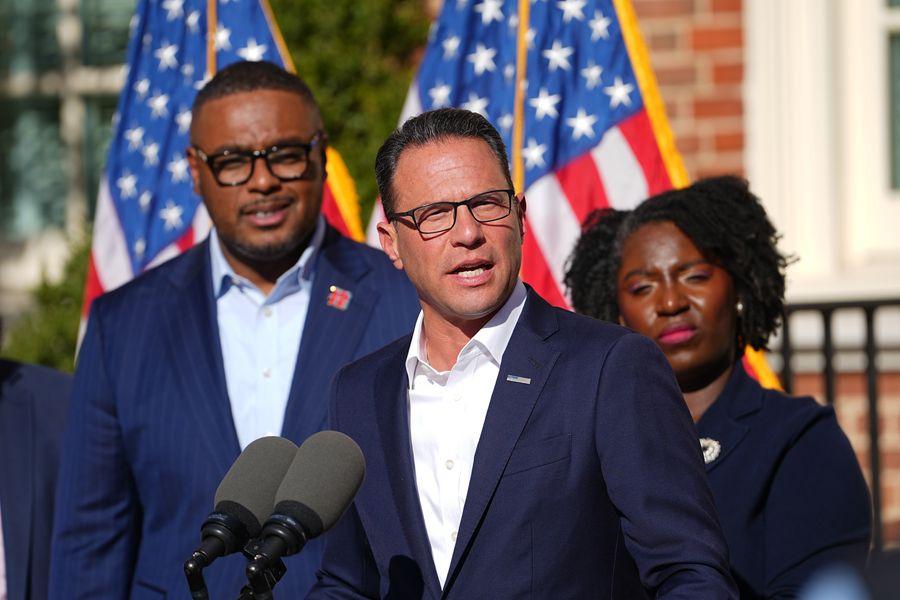
Clearly, Pennsylvanians are hungry for change and leadership—and the buck stops with Gov. Josh Shapiro.
For years, the governor has blamed his inaction and ineptitude on a divided legislature. Now, Mr. Get-Stuff-Done’s go-to excuse no longer works. He’ll have to follow through on the promises he’s made—something he’s struggled with since taking office.
But he’ll need to do more than sit back and wait for the legislature. During the gubernatorial debate, Shapiro hinted at supporting voter ID and school choice, but only if the legislature puts something on his desk to sign.
That’s not leadership. If the governor wants to be taken seriously as a future presidential candidate, he needs to lead on the issues that he claims to support.
For example, on school choice, he doesn’t need to wait for the legislature to send him a bill. He can opt Pennsylvania into the Federal Scholarship Tax Credit, a new program projected to raise about $700 million in scholarship funds for nearly 2 million Pennsylvania K–12 students. Shapiro has already stated he is “very open” to opting in, suggesting that he would decide “in the next few weeks.” (For the record, he made that promise several weeks ago, so the clock is ticking.)
This isn’t, of course, an invitation to do everything unilaterally. The vocal pushback that the Shapiro administration received after proposing 500 pages of new health regulations should be a clue that Pennsylvanians aren’t keen on a heavy-handed executive branch.
Big government isn’t what Pennsylvanians want. Moreover, raising taxes, enacting onerous regulations, or restricting energy production will not make Pennsylvania more affordable.
This November, voters punished one party for the rising cost of living, and they will punish the next one just as quickly if the bills keep climbing. And with one-party control in Harrisburg, only one party will be left to blame. Pennsylvania Democrats would be wise to tread carefully.
Andrew Lewis is the president and CEO of the Commonwealth Foundation, Pennsylvania’s free-market think tank.
Platner Says He Won't Be an 'a–hole' Like Fetterman in Senate
By Tara Suter, The HillBlame Pennsylvania for the Gerrymander Mania
By Guy Ciarrocchi, RealClearPA
What Chris Rabb's Win in Philly Means for Fetterman
By Sam Janesch, InquirerVoters Signal They're Done With MAGA Chaos
By Mark S. Singel, PennLive
Republicans: Pre-Canvassing Bill 'Lets Dead People Vote'
By J. Kramer, Center Square
Pennsylvania Today
Featuring the latest pennsylvania news
RCP Today
Top stories on RealClearPolitics
Investigations Today
Latest investigations news
Defense Morning Recon
Featuring the latest news