
PA GOP Lost Because It Gave Nothing, Offered Nothing
Shapiro won a rare ruling trifecta by promising voters an immediate return on their investment in him, starting with a boost to the minimum wage.
Last updated 06:28 PM EST • Read time: 8m
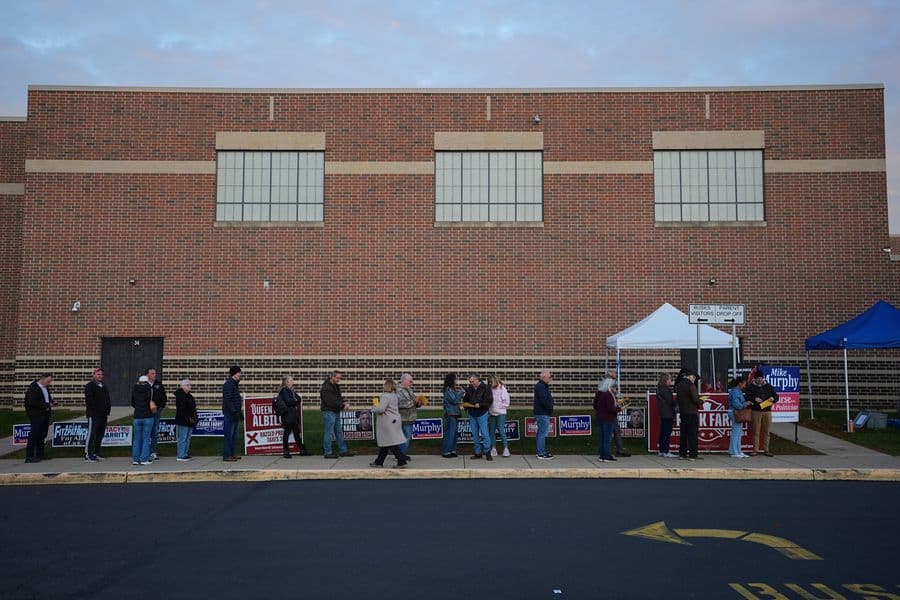
Josh Shapiro has spent four years telling Pennsylvanians he would get stuff done if only the always-divided legislature let him. On Tuesday, the voters went to the polls and awarded him both chambers. Shapiro beat overmatched Stacy Garrity 60.1% to 38.6%, a 21.5-point margin and nearly seven points wider than his 2022 win over the even more hapless Doug Mastriano. This time, the rest of the Democratic ticket rode in behind him, as the Republicans had in neighboring Ohio in 2022 when fellow process-focused politician Mike DeWine steamrolled to a second term.
Democrats won "bigly" on Tuesday because Republicans broke the first rule of Rust Belt patronage politics, which is that you have to give to get. Shapiro rewrote his data center policy in February to placate voters strained by rising electricity costs and promised that the first bill to reach his desk will raise the minimum wage to $15 an hour — which admittedly won’t help inflation one bit, but may allow a few more families to make ends meet. Meanwhile, Trump gave his voters costly tariffs and an even costlier war, but with no offsetting patronage (his promise of a $5,000 credit for voting the Republicans back in won’t be materializing).
When you try to cut corners by giving nothing and offering nothing, you pay way more in the end. Pennsylvania Republicans lost four congressional seats and the governorship by wide margins. Democrats will hold the state Senate 26-24 in January, the first true majority they have won there since 1978, and pushed their House edge to at least 111 seats. Pennsylvania has not seen a Democratic trifecta since 1993, when Frank Pecora switched parties during his last year in office.
Mandate in hand, Shapiro now has to deliver on more than infrastructure repairs and marijuana access. His administration says 310,000 Pennsylvanians will lose Medicaid in 2029. Pittsburgh's school district, to cite the example nearest and dearest to my own heart, is down to 18,000 students and will close nine buildings in 2027. Electric bills continue to skyrocket across the PJM grid as more data centers come online. He can no longer blame soon-to-be former senate majority leader Joe Pittman when budget negotiations stall.
Previously bullish on AI, Shapiro made an shrewd about-face in February, when he used his budget address to tell developers to find their own power suppplies or pay for new generation. A Quinnipiac poll in June put approval of his handling of the industry at a dismal 24 percent, meaning he had to bow to public opinion or damage his reelection prospects. In October, his administration petitioned the Public Utility Commission to put PPL's large data centers in their own rate class. "Pennsylvanians should not be left paying higher electric bills because of data center developers," he said. Garrity went further and called for a moratorium on the industry, though during the debate she confusingly said these issues needed to be resolved quickly. In the campaign's final weeks, the newly-christened AI opponent aired a commercial built around an AI-generated Shapiro confessing to a list of alleged scandals — I watched it during the Steelers-Browns game, as did my Bentleyville relatives — with a disclosure 40 seconds in coming from AI Shapiro in which he said, "This ad was created with AI, thanks to big beautiful data centers."
A desperate move from an understandably desperate candidate; by that point, Garrity had raised a paltry $9.2 million. Shapiro outspent her nearly ten to one. The state party had cleared the primary for her to avoid a fight it could not pay for. This was a huge mistake. At the only debate, on Oct. 7 in Harrisburg, she spent her first answer, ostensibly on that data center question, marking the 10/7 anniversary of the Hamas attack on Israel. Her far more capable running mate, Jason Richey, had grown up in Aliquippa, wrestled in college, built a big-time Pittsburgh law practice and chaired the Allegheny County Republicans. Richey should have been the nominee. David McCormick, another ex-college wrestler with a big-money career, ousted Bob Casey in 2024 on the strength of a resume that looks a lot like Richey's. But instead of letting him dictate the pace, the GOP sent poor Richey to defend that boneheaded AI ad outside a Lancaster polling place on Election Day.
Amazingly, Republican Camera Bartolotta held the 46th Senate District across Washington and Greene counties by beating independent Jodi Borello 56 percent to 44, six months after the skill games industry spent millions trying to end her career in the primary. "My opponent wasn't Al Buchtan. It was Pace-O-Matic," she said in May, and the Pace-O-Matic’s second effort in the general was equally unavailing (Bartolotta, presumably, will back the more punitive taxation scheme Josh Shapiro now has carte blanche to impose). In the Lehigh Valley, Ryan Mackenzie lost 56 to 44 to Bob Brooks. One of the few high-quality Republican candidates on Tuesday’s ticket, Mackenzie holds a Harvard MBA and had beaten Democratic incumbent Susan Wild by one point in 2024. Brooks is a retired Bethlehem firefighter who runs the state firefighters union, and he ran a solid working-class Rust Belt campaign; Mackenzie didn’t stand a chance as a flagbearer for a party that had given him as little to work with as it had his constituents.
Former U.S. Rep. Conor Lamb and I spent an hour last month exploring the question that jaded Rust Belt voters ask before any other, which is what's in it for them. Trump’s One Big Beautiful Bill raised the tax on the richest university endowments to 8 percent, yet that money went to the Treasury rather than to forgive the student loan debt of misguided working-class kids duped into thinking college was the answer. Tariffs collected $173 billion in fiscal 2026. After the Supreme Court ruling on the emergency tariffs, importers took $145 billion in refunds over 12 months. The families who paid those markups got zero, zippo, zilch. The subsequent Iran war drove gas prices into the stratosphere, with no relief in sight despite that conflict’s unpopularity.
Republican insiders called Garrity's bid futile before she entered the race, but at least she’s gone from the stage now. If the party wants to rebuild around anyone, it should either double down on the exceedingly competent Richey or look at winners like state Rep. Jonathan Fritz, who won 70 percent of the vote in Wayne and Susquehanna counties on Tuesday, serves as deputy whip, ran Honesdale as mayor and Wayne County as commissioner before Harrisburg, and at 49 has plenty of time to mature (and matter).
Nationally, Democrats have won at least 54 Senate seats, seven more than they held. John Fetterman had promised in September to remain "the 51st vote that I ran on." He is, for now, merely a very tall, very wide 54th vote. "We just Fetterman-proofed the US Senate," Malcolm Kenyatta posted Tuesday night. Fetterman did not campaign for a single Democrat this year and is fast approaching his own "time of choosing." He polls at 77 percent approval with Pennsylvania Republicans and around 20 percent with Democrats, and U.S. Rep. Chris Deluzio, reelected in a landslide in a swing district, is giving a 2028 primary run "serious thought." It’s an either/or choice for a colossus of a man who once seemed too big to fail: Fetterman can play nice with his caucus for two years or switch parties before the primary removes him. Pennsylvania's primaries are closed, so all those Republicans and independents in the throes of Fettermania won’t be voting in the Democratic one.
When Jesse Jackson addressed attendees at the Democratic National Convention in San Francisco in July 1984, he told them that incumbent president Ronald Reagan had cut children's breakfast and lunch programs and then had the temerity to say grace over an empty table. Reagan, Jackson declared to the multitudes, was "not familiar with the structure of prayer": you give thanks for the plate in front of you, not the one that someone took away. In Reagan’s defense, the "Gipper" had at least committed to a monetary policy that curtailed inflation and managed to simplify the onerous World War Two-era tax code. Trump, by contrast, slashed Medicaid, fired hundreds of thousands of government workers, and enriched himself and his cronies via crypto investments and other previously unthinkable White House hustles (you can still claim a free Trump knife here). Owing to the president’s refusal to deliver pork for his constituents much less share the unimaginable sums of money flowing to rich backers, Democrats now find themselves with a fully-stocked table for the first time since 1993 and need to pray they don't blow it. The Republicans, meanwhile, need to start praying for a comeback.
Oliver Bateman is a historian and journalist based in Pittsburgh. He blogs, vlogs, and podcasts at his Substack, Oliver Bateman Does the Work.

Platner Says He Won't Be an 'a–hole' Like Fetterman in Senate
By Tara Suter, The HillBlame Pennsylvania for the Gerrymander Mania
By Guy Ciarrocchi, RealClearPA
What Chris Rabb's Win in Philly Means for Fetterman
By Sam Janesch, InquirerVoters Signal They're Done With MAGA Chaos
By Mark S. Singel, PennLive
Republicans: Pre-Canvassing Bill 'Lets Dead People Vote'
By J. Kramer, Center Square
Pennsylvania Today
Featuring the latest pennsylvania news
RCP Today
Top stories on RealClearPolitics
Investigations Today
Latest investigations news
Defense Morning Recon
Featuring the latest news